
Jane Austen’s House in Chawton – How to Visit in Hampshire
⋆˙⟡♡︎ This post may contain affiliate links. Please see my disclosure policy for details. Thanks for your support ⋆˙⟡♡︎
Austen lovers, did you know that you can visit Jane Austen’s House?
It’s a charming cottage in Chawton where Jane lived with her mother and sister. It’s also where she wrote six of her major novels.
So, if you’re an enthusiast, this is your chance to follow in Jane’s footsteps and see how this legendary novelist would have lived.
As a lifelong fan of her stories, I left feeling utterly enchanted and would encourage any Austen lover to go.
Here is how to visit Jane Austen’s House in Chawton, aka ‘Jane Austen’s Village’, in Hampshire.

Where did Jane Austen live?
Jane Austen was born in the village of Steventon and spent the first 25 years of her life living with her family in her reverend father’s rectory.
She then lived in Bath, where she resided at various addresses after her father retired, including 4 Sydney Place, Gay Street and Green Park.
After her father passed away, she stayed briefly in Southampton’s Castle Square before finally moving to Chawton.
Her mother and sisters then lived in a cottage her brother Edward provided.
Finally, she moved to College Street in Winchester briefly for medical treatment, where she sadly passed away.

Related Post: Jane Austen in Bath – 18+ Places to Visit


Jane Austen’s Village
Jane lived near the end of her life in Chawton with her mother and sister Cassandra.
Her brother Edward provided them with a cottage, and she lived here for eight years before she died.
In that time, she wrote many of her beloved novels:
Sense and Sensibility, Pride and Prejudice, Mansfield Park, Emma, Northanger Abbey, and Persuasion were all written in this house.
Long after her death, the Jane Austen Society protected the residence from demolition in 1940.
The Jane Austen Memorial Trust later decided to run the cottage as a museum, which opened to the public in 1949.
Today, Chawton is affectionately known as Jane Austen’s Village, where enthusiasts can follow in her footsteps.

Can you visit Jane Austen’s House?
Yes, you can. In Chawton, you can visit Jane Austen’s House Museum.
It’s a unique chance to step into Jane’s shoes and see where she wrote six of her famous novels.
You can explore the family gardens, see Jane’s bedroom, admire treasured possessions, and even see Jane’s writing desk!
It’s one of the world’s most treasured Austen sites and a must-visit for fans.


How to get to Chawton in Hampshire
Jane Austen’s House Museum is located in Chawton, a quaint village in the heart of Hampshire.
It’s about a 30-minute drive from Winchester or a 60-minute drive from Southampton.
The easiest way to visit is by car. There is parking available on Winchester Road opposite the house.
There’s no train station in Chawton; the closest would be Alton. From here, you can take the number 64 Stagecoach service to the museum.

The address is Winchester Rd, Chawton, Alton GU34 1SD. Click here for a Google Pin.


Jane Austen House opening times & prices
Jane Austen’s House Museum is open year-round, typically from 10 am to 5 pm. In winter, it’s 10 am to 4 pm.
They often close on certain days during the week, so they strongly recommend booking your visit in advance to avoid disappointment.
At the time of writing, ticket prices are £15.50 per adult. The great thing about visiting is you can pay this fee once and visit all year.


Things to do at Jane Austen’s House
A visit to Jane Austen’s House is like stepping back in time to the Regency era.
It’s a look into what life was like for Jane while living here and what inspired her stories.
Most rooms have been reimagined with replica items and authentic period furniture.
However, the museum also displays many items that belonged to Jane Austen and her large family.
Here are all the things to do at Jane Austen’s House Museum during your visit.

1. Jane Austen’s Garden
The first place you’ll explore is the garden, a lovely setting around the side of the house.
Plenty of benches invite you to relax, or you can play croquet on the lawn. There are also lots of toys for children to play with.
A shed area has some old gardening equipment, as well as a cute second-hand bookshop.
Often, the house has a visitor limit, so you may have to wait to go inside. If so, they will call you when it’s time to go in.


2. Austen family rooms
As part of your tour, you can explore the Austen family rooms to see what everyday life was like.
Most of the furniture is from the time period, but some items are replicas. Many exhibits contain authentic items that belonged to the Austens.
In the Drawing Room, you can find Jane’s father, Reverend George Austen’s, bookcase and some of Jane Austen’s letters.
You can also visit the Family Room and the Brothers’ Room, where you can discover the fates of her six male siblings.
Some were clergymen, others bankers and literary agents, and some served in the Royal Navy.


3. Jane Austen’s Writing Table
One of the most spectacular exhibits in Jane Austen House is Jane’s writing table in the dining parlour.
This small, fragile 12-sided table is where she wrote her most famous novels.
It really surprised me, as it’s such an unassuming place tucked away in the corner. Apparently, she didn’t want anyone to suspect her.
In Jane’s time, her books were published anonymously. She had no idea how her work would affect people for centuries beyond her years.
Jane also never would have guessed how precious this tiny table would become to so many.
There’s almost a cult-like appreciation of his humble corner, and I was over the moon to finally see it for myself.


4. Jane Austen’s Bedroom
The house has plenty of family bedrooms to explore, but one of my favourites was Jane Austen’s Bedroom.
Most of the furniture is a replica of how the room would have looked in Jane’s time.
You’ll find a replica tent bed that Jane and Cassandra shared when they lived with her father at the rectory.
There’s also a cast-iron fireplace and a traditional washstand. Of course, there’s a pile of books on her bedside table, as Jane was an avid reader.
Although most items inside are copies, you will find some authentic possessions, like Cassandra’s sampler needlework.
This was a traditional way for young girls to learn sewing and letters in the 18th century.

5. The Art of Writing & Austen Treasures
In addition to the family rooms, you’ll find several fascinating museum galleries with a wide range of exhibits.
The Art of Writing room explains how Jane wrote her books and how she rewrote her first-draft manuscripts for publication.
Unfortunately, her first drafts were destroyed, as was tradition back then, but some of her very early teenage manuscripts were salvaged.
You’ll find many letters, novels and even a replica inkwell and quill which you can play with.
Maybe the most precious item is the first edition copy of Sense and Sensibility (1811) in its original publisher’s boards.
In the next room, you’ll find a chamber filled with Austen Treasures.
It includes her gold ring and a patchwork coverlet made by Mrs Austen, Jane, and Cassandra.


6. Courtyard & Gallery
Before you leave the house, you can visit the Courtyard Gallery, which has some memorabilia from recent years.
It’s funny to think that, in Jane Austen’s time, she published her works anonymously and she wasn’t recognised for them.
Today, she is revered as one of the greatest female novelists of all time, and people obsess over her screen adaptations.
This gallery is called ’Austenmania’ and has movie posters, costumes, news clippings and props from various productions.
After, you’ll exit Jane Austen’s House through the courtyard and step back into the gardens.


More things to see in Jane Austen’s village
After your visit to Jane Austen’s House, I wouldn’t leave Chawton just yet.
Today, this charming place is known as ‘Jane Austen’s Village ’, and you can follow a Jane Austen Trail to notable landmarks.
There are numerous pretty cottages you can visit along the way:
- Thatch Cottage
- Pond Cottages
- Orchard Cottages
- Malthouse Cottages
Eventually, you’ll reach Home Farm and Chawton House, where her brother Edward lived, and St Nicholas Church, where the Austens are buried.


Chawton House
Chawton House is an Elizabethan manor built by the Knight family in the 16th century that was once home to Jane Austen’s brother, Edward.
Jane called it the ‘Great House’ in her letters and would have visited often.
Not much has changed about this estate since Jane Austen’s day, and it feels like stepping back in time.
You can visit the house and see Jane’s reading corner, and then pop into the charming Old Kitchen Tearoom.
There’s also a library with 4,500 rare and early editions of works by women writers from 1660 – 1860 (a prior appointment is needed).
If you want to extend your visit to Chawton, you can even stay overnight in their North Wing apartment.

St Nicholas Church
St Nicholas’ Church is a historic 13th-century parish church where Jane Austen would have worshipped.
Unfortunately, a fire forced its rebuilding in 1872. So, the church won’t look exactly the same as when Jane visited.
However, in the graveyard, you can see where her mother, Cassandra Leigh or Mrs Austen and her sister, Cassandra Austen, are buried.


Where is Jane Austen buried?
Jane Austen moved to College Street in Winchester for medical treatment a couple of weeks before her death at 41 years old.
The exact cause is unknown, but many believe it was Addison’s disease, Hodgkin’s lymphoma or lupus.
She was buried in Winchester Cathedral, where you can find Jane Austen’s grave. A black memorial stone marks it in the north nave aisle.
It doesn’t credit her novels, as her books were published anonymously in her lifetime, but ‘the extraordinary endowments of her mind’.
There is also an additional memorial for Jane in Poets’ Corner with an ornate commemorative tablet.
It’s only a 30-minute drive from Chawton, so you can easily combine it with a day trip as part of your visit to Jane Austen’s Village.


Is Jane Austen’s House worth visiting?
Yes, if you’re a fan of Jane Austen’s novels, visiting her house should be on your literary bucket list.
It’s such a unique opportunity to follow Jane’s footsteps and see the birthplace of her famous novels.
As a lifelong fan, I had the most magical time exploring this museum. Seeing her bedroom and legendary writing table altered my brain chemistry.
Also, exploring Jane Austen’s village, where she spent a long chapter of her life, was really special.
It’s the cutest place in the countryside, like something out of a storybook.
Don’t skip this whimsical cottage in Hampshire; it feels like a trip to the Regency era and will leave you enchanted.


Pretty places to visit nearby
Once you’ve explored Jane Austen’s Village, you can visit some whimsical places nearby.
The hamlet of Alresford is picturesque. Stroll over the River Arle to see the Fulling Mill, a medieval thatched cottage that looks like a fairytale.
Or drive 30 minutes to Winchester for more sightseeing and pay your respects at Jane Austen’s grave.
Winchester was the historic capital of the Anglo-Saxon Kingdom of Wessex under King Alfred the Great.
So, there is plenty to do in this historic city. Start by visiting King Arthur’s Round Table at Winchester Great Hall.


More Jane Austen in England
If you’re on a Jane Austen pilgrimage and planning a Regency road trip, plenty of places across England are worth visiting.
One of the best places to experience a slice of Jane Austen’s life is Bath. Here, you can visit the Jane Austen Centre to learn more about her.
Then you can visit more Regency attractions like the Roman Baths, Pump Rooms, Royal Crescent, Sally Lunn’s, and Holburne Museum.
They also have a Jane Austen festival where hundreds of people dress up in Regency-era costumes to promenade.

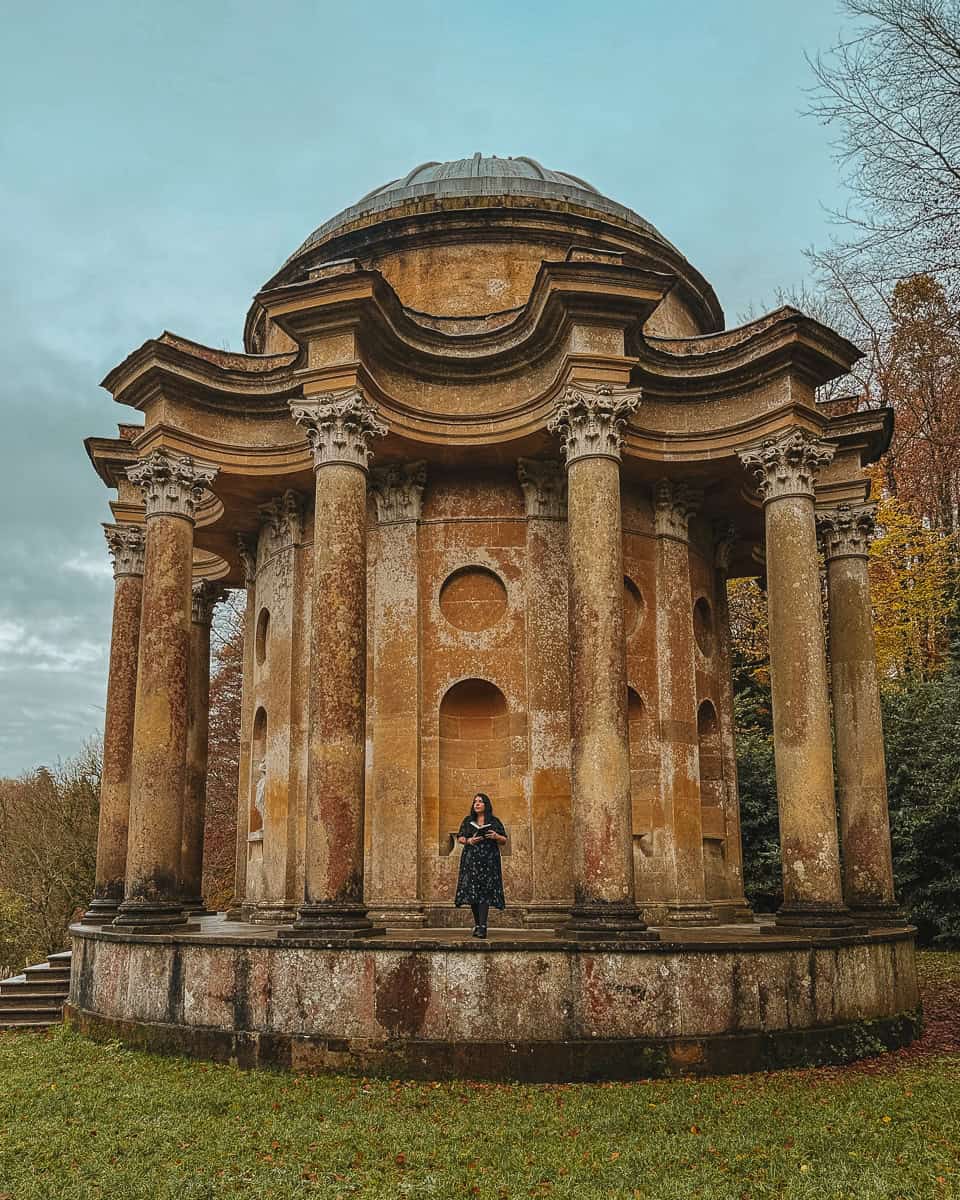
After Bath, you can go ‘set-jetting’ to filming locations used in the various TV and film adaptations of her novels.
From Pride & Prejudice, I recommend heading to Wiltshire to visit Stourhead Gardens to see where Mr Darcy proposes in the rain.
You can also head up to the Peak District to find many Pride & Prejudice filming locations.
Chatsworth House was Pemberley in the 2005 production, and Lyme Park was Pemberley in the 1995 TV series.
There are plenty more to find, so be sure you read my ultimate guide for Pride and Prejudice locations in the Peak District next.


Recommended Travel Resources
–
Read more of my Jane Austen guides
How to Visit Mr Darcy’s Pemberley
How to visit the Keira Knightley Rock from Pride & Prejudice
8+ Pride and Prejudice Locations in the Peak District
Stourhead Pride & Prejudice filming locations
18+ Jane Austen Locations in Bath
Discover England

Save Jane Austen’s House Museum for later


